

Introduction to Blue Logos
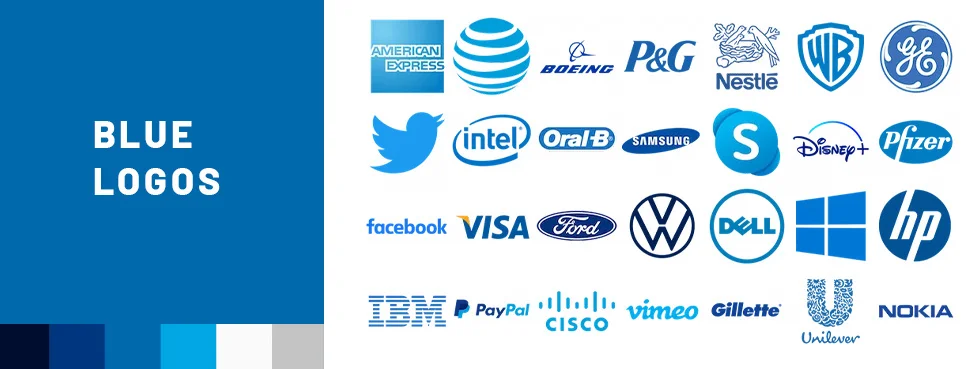
A blue logo is a brand mark where blue is the dominant color used in the symbol, wordmark, or icon. Blue logos appear across industries as company logos that are blue, logos with blue elements, and blue company logos with names. From blue and white logos to dark and light blue logo designs, brands use blue in logo systems to signal reliability and clarity. You will see blue brand logos as circles, squares, lines, stripes, letters, and icons. Examples include logos with blue squares, blue circle logos, blue logos with white accents, and popular brand logos that use corporate blue to build recognition.
Why Blue Is One of the Most Used Brand Colors
Blue is one of the most used brand colors because it communicates trust, stability, and professionalism at a glance. Companies with blue logos benefit from broad acceptance across cultures and strong performance in digital environments. Blue company logos scale well on screens, print, and apps, making them common among famous blue logos and blue logo companies. From navy blue color logos to light blue logo styles, brands choose blue for consistency and longevity. This is why companies with a blue logo, blue logo brands, and famous logos with blue dominate technology, finance, healthcare, and global markets.
Meaning and Psychology of the Color Blue
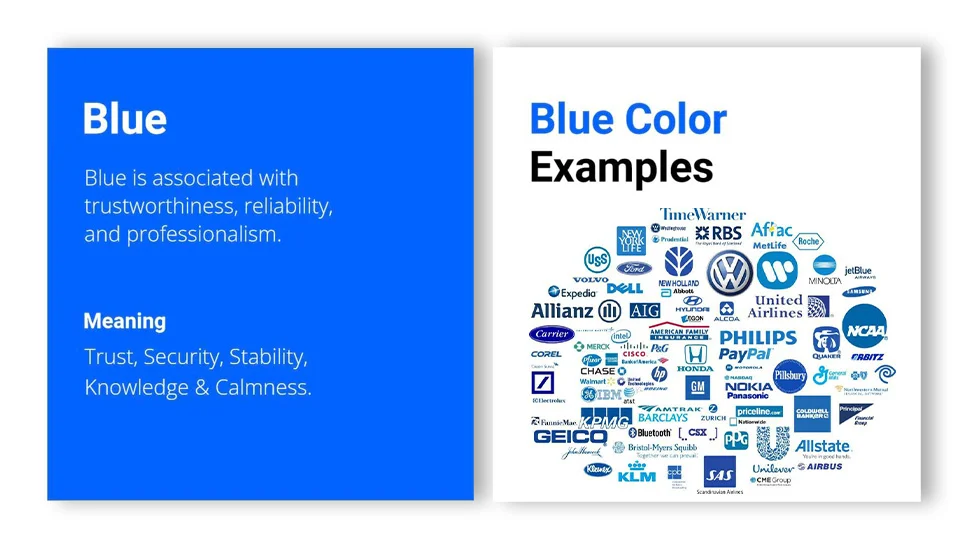
Blue color psychology explains why blue company logos consistently build trust, influence emotions, and shape brand perception through symbolic meaning, consumer response, and the strategic use of dark and light blue shades.
What Blue Symbolizes in Branding
In branding, blue symbolizes trust, stability, intelligence, and dependability. This is why blue company logos are commonly used by blue brands that want to appear credible and professional. Many company logos that are blue communicate security and confidence, making blue a preferred color for corporate blue identities. From famous blue logos to brand logos that are blue, the color reinforces long term reliability. Blue in logo design also signals clarity and control, which is why companies with blue logos are often associated with authority and consistency.
Psychological Effects of Blue on Consumers
Psychologically, blue creates a sense of calm and reassurance. Studies in color psychology show that blue reduces perceived risk and increases user comfort, which directly supports decision making. This effect explains why logos with blue, blue and white logos, and blue logo companies perform well in digital products and services. Blue brand logos help consumers feel safe and informed, increasing trust in blue logo companies and blue brands across competitive markets.
Emotional Associations of Different Blue Shades
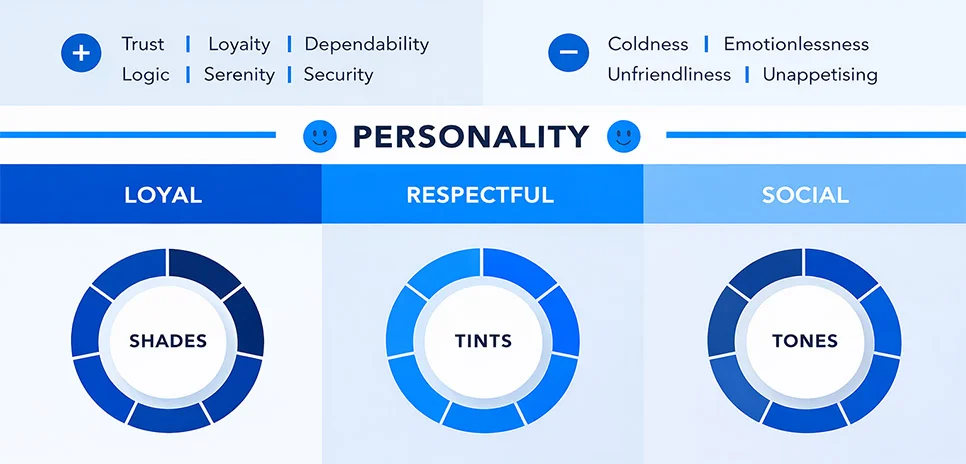
Different shades of blue create distinct emotional responses. Dark blue brands and navy blue color logos convey strength, authority, and professionalism. Light blue logos suggest openness, friendliness, and innovation. Designs that combine dark and light blue logos balance trust with approachability. Brand blue and white logo combinations emphasize clarity and cleanliness, while blue circle logos and blue square logos reinforce structure and unity. These emotional associations allow companies with blue logos to tailor brand perception without changing core identity.
Why Companies Choose Blue for Their Logos
Companies choose blue logos because the color consistently communicates trust, professionalism, and security while aligning with technology, finance, and healthcare brands that depend on credibility and user confidence.
Trust, Reliability, and Security Perception
- Blue consistently signals trust, reliability, and security, which is why color psychology research ranks it among the most trusted colors across cultures.
- Companies with a blue logo are common in industries where confidence and credibility are critical, such as technology, finance, healthcare, and enterprise services.
- Blue company logos reduce perceived risk, helping users feel more comfortable and secure during brand evaluation and comparison.
- Brand logos that are blue perform strongly at key decision making moments by reinforcing professionalism and dependability.
- Trust focused branding, including the strategic use of blue, has been shown to increase conversion likelihood by more than 30 percent, reinforcing why blue logos remain dominant.
Professionalism and Corporate Identity
- Blue reinforces a professional and stable corporate identity by conveying structure, responsibility, and long term vision.
- Corporate blue is widely used in company logos that are blue because it communicates authority and organizational confidence.
- Dark blue brands signal strength and reliability, while light blue logo systems suggest openness and modernity.
- Blue brand logos maintain consistency across digital and print platforms, supporting cohesive brand presentation.
- Blue and white logo combinations are commonly used to communicate clarity, professionalism, and visual authority.
- This level of professionalism makes blue colour logos effective for global audiences and long lasting brand recognition.
Blue and Technology Brand Alignment

- Blue strongly aligns with technology and innovation by signaling intelligence, efficiency, and digital clarity, making it a preferred color for software, apps, and tech platforms.
- Many companies with a blue logo rely on the color to build user trust and usability, especially for products handling data, communication, and continuous digital interaction.
- Blue logos with names, blue circle logos, and blue square logo designs and social media design perform exceptionally well on screens due to high readability and accessibility across devices.
- Industry research consistently shows that a majority of leading global technology brands use blue as a primary brand color to reinforce credibility and long term adoption.
Blue in Financial and Healthcare Branding
- Blue is widely used in financial branding because it communicates security, stability, and reliability, which are essential for banks, insurers, and payment platforms.
- Healthcare brands rely on blue company logos to convey calmness, care, and professionalism, helping patients feel reassured during medical or health related decisions.
- Research in healthcare branding shows calming colors like blue reduce anxiety and increase user confidence, improving trust in medical services and providers.
- The prevalence of blue and white logos and dark blue branding reflects how blue directly supports trust driven engagement and long term loyalty in finance and healthcare industries..
Types and Shades of Blue Used in Logos
Different shades and combinations of blue logos influence brand perception by balancing trust, authority, innovation, and visibility through light, dark, navy, and modern blue color applications.
Light Blue vs Dark Blue

Light blue logos project openness, approachability, and innovation, making them common among modern apps, startups, and consumer facing blue brands. Dark blue brands communicate strength, dependability, and authority, which is why many company logos that are blue in enterprise, finance, and B2B sectors rely on deeper tones. Brands that combine a dark and light blue logo balance trust with friendliness. Recent design trend analyses show that brands using contrasting blue shades improve recognition and recall across digital platforms.
Navy Blue and Corporate Authority

Navy blue color logos are strongly associated with corporate authority and long term stability. Many blue company logos in finance, consulting, and global enterprises use navy blue to reinforce seriousness and leadership. Corporate blue reduces visual noise and enhances readability, especially in logos with blue text or blue logos with names. Studies in brand perception indicate that darker blue tones are perceived as more reliable than lighter shades, supporting their continued dominance in professional branding.
Teal and Cyan in Modern Branding

Teal and cyan are increasingly popular in modern blue logo design because they blend trust with creativity. These shades are common in blue logo companies focused on innovation, wellness, and technology. Teal and cyan logos stand out among traditional blue brand logos while maintaining a sense of calm. Design research shows that brighter blue variants improve engagement in digital environments, especially for logos with blue icons, blue circle logos, and blue square logos used in apps and interfaces.
Blue Color Combinations in Logo Design
Blue is highly versatile when paired with other colors. Blue and white logos emphasize clarity and cleanliness, making them common among company logos that are blue in healthcare and technology. Blue and orange logos create contrast and energy, while blue and green logos suggest growth and sustainability. Red and blue logos convey strength and urgency, often seen in global brands. Effective blue color combinations increase visual hierarchy and brand differentiation, helping blue logos brands perform consistently across print, web, and mobile platforms.

What Colors Go With Blue Logos. Best Pairings That Work
A blue company logo does not need to rely on a single shade. Pairing blue with the right supporting color improves contrast, readability, and brand positioning through strategic brand collateral design. Whether the goal is a bold, high energy look or a clean, trust first identity, these combinations help blue logos stay distinctive across web assets, app icons, packaging, and print materials.
Blue and orange
Blue and orange sit opposite each other on the color wheel, which creates strong contrast and instant visibility. This pairing works well for brands that want trust plus action. Blue anchors credibility, while orange adds warmth, urgency, and conversion focused energy. It is especially effective for tech products, mobile apps, and service brands where calls to action need to stand out without sacrificing professionalism.

Blue and white

Blue and white is the most common blue and white logo combination because it feels clean, clear, and universal. The contrast improves legibility, making it ideal for logos with names, icons, and small app marks. Since this pairing also appears naturally in skies and clouds, it feels familiar and calming. It is a strong choice for healthcare, finance, SaaS, and any brand that wants a trusted, minimal look.
Blue and yellow
Blue and yellow creates a confident and friendly identity. Blue communicates stability and reliability, while yellow adds optimism, approachability, and visibility. Because yellow is bright, it can highlight key elements like an icon, accent line, or symbol without overpowering the logo. This combination works well for retail, education, and consumer brands that want to look trustworthy but still energetic and accessible.

Two shades of blue
Using two shades of blue is a smart option when you want a modern look without introducing a second color family. A light blue plus dark blue approach adds depth, hierarchy, and structure while keeping the identity cohesive. This is common in fintech, enterprise tools, and digital platforms because it maintains trust signals while improving icon clarity. It also supports responsive branding where the logo must work at tiny sizes.

Industries That Commonly Use Blue Logos
Blue logos are widely used across technology, finance, healthcare, retail, and industrial sectors because the color consistently signals trust, stability, and reliability at scale.
Technology and Software Companies
Technology and software companies widely adopt blue logos because blue communicates intelligence, reliability, and ease of use. Many blue logo companies in SaaS, apps, and digital platforms rely on blue brand logos to build user trust in data driven products. Famous blue logos and popular brand logos in tech often use blue and white logos, blue circle logos, or blue square logos to ensure clarity across screens. This consistency makes tech companies with blue logos highly recognizable in crowded digital environments.
Financial Services and Banking
Financial services and banking brands frequently use blue company logos to convey security and stability. Company logos that are blue reduce perceived financial risk and reinforce professionalism. Dark blue brands and navy blue color logos are especially common among banks, payment platforms, and insurance providers. These blue logo companies benefit from strong trust signals, which is why companies with a blue logo dominate financial branding worldwide.
Healthcare and Pharmaceutical Brands
Healthcare and pharmaceutical brands use blue logos to project calm, care, and reliability. Blue and white logos are common because they signal cleanliness and clarity. Many healthcare companies with a blue logo rely on light blue logo styles to reduce anxiety and create reassurance. Blue brand logos in this sector help patients associate brands with safety, expertise, and long term care.
Retail and Consumer Goods
Retail and consumer goods brands use blue logos to balance trust with mass appeal. From blue logos with names to brand logos that are blue on packaging and storefronts, blue supports familiarity and consistency. Popular blue logos in retail often combine blue with white, yellow, or orange to enhance visibility and shelf impact. This versatility allows blue logos brands to appeal to wide consumer audiences.
Aviation, Automotive, and Manufacturing
Aviation, automotive, and manufacturing industries rely on blue logos to represent precision, strength, and dependability. Blue company logos in these sectors often use dark and light blue logo combinations or bold blue symbols to emphasize engineering excellence. Company logos that are blue in manufacturing communicate durability and scale, making blue a preferred color for global industrial brands.

Famous Brands With Blue Logos
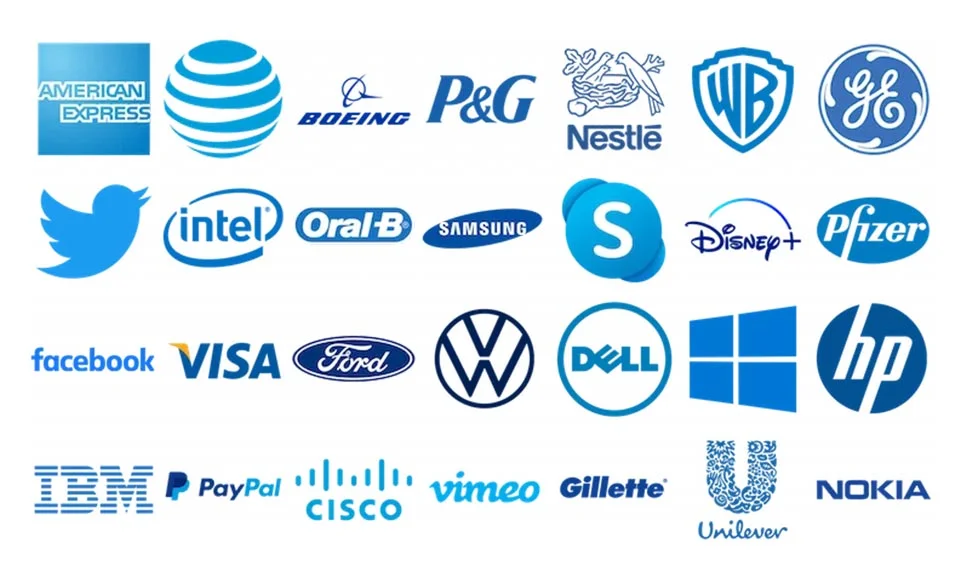
Famous brands across technology, finance, consumer markets, and global enterprises use blue logos to establish trust, strengthen recognition, and maintain consistent brand authority in competitive industries. Blue company logos dominate global branding because the color scales well across platforms, cultures, and generations.
Facebook’s blue logo has both a personal and strategic origin. Mark Zuckerberg’s red green color blindness made blue the most distinguishable color for him. Beyond that, blue strongly represents trust, stability, communication, and calmness. These traits align perfectly with a global social platform built on interaction and connection. The blue and white color scheme scales cleanly across devices, screens, and cultures, reinforcing Facebook’s role as a dependable digital communication network.
Oral-B
Oral-B uses a blue and white logo to communicate hygiene, freshness, and professional dental care. Blue is closely associated with cleanliness, water, and medical trust, making it ideal for oral health products. The bold white typography on a blue background ensures strong visibility and clarity on packaging. This color pairing reinforces safety, clinical credibility, and global reliability, which are essential attributes for a brand focused on daily health and personal care routines.
Windows
Microsoft Windows transitioned from a multi color logo to four blue squares to reflect clarity, consistency, and modern digital design. The blue color communicates stability, calmness, and trust, which are essential for an operating system used worldwide. The square window form symbolizes access, creativity, and structure. Blue also ensures visual consistency across devices and interfaces, reinforcing Windows as a reliable platform for productivity, innovation, and long term technological evolution.

IBM
IBM’s blue logo is iconic for both its color and structure. The horizontal stripes represent speed, data flow, and technological advancement, while the blue color signals trust, professionalism, and progress. The bold capital letters reinforce authority and enterprise credibility. IBM’s restrained color usage and minimal design reflect clarity and precision, aligning with its role in enterprise technology, data systems, and global innovation leadership across decades.

Ford
Ford’s blue oval logo reflects heritage, durability, and trust. The dark blue background symbolizes strength, reliability, and engineering excellence, while the white lettering conveys clarity and elegance. Silver accents in earlier versions highlighted craftsmanship and quality. The flowing typography adds warmth without sacrificing authority. Together, these elements create a timeless automotive identity that reinforces Ford’s commitment to performance, dependability, and long standing manufacturing expertise.
Walmart
Walmart combines blue and yellow to balance trust with optimism. Blue represents reliability, professionalism, and scale, while yellow adds warmth, energy, and accessibility. The six rayed spark, known internally as the sparkle, symbolizes innovation, service, and community focus. This color system supports Walmart’s positioning as a dependable yet approachable retailer, reinforcing affordability while maintaining strong brand recognition across global markets.
Dove
Dove’s blue cursive wordmark communicates softness, trust, and premium care. The flowing typography suggests gentleness and self assurance, while blue reinforces calmness and reliability. The gold dove symbol adds warmth, purity, and a sense of luxury. Together, these elements position Dove as a brand focused on real beauty, emotional connection, and skin friendly care, while maintaining a clean and trustworthy visual identity.
Samsung
Samsung’s blue oval logo reflects innovation, stability, and global consistency. Blue strengthens trust and technological credibility, while the oval shape suggests inclusivity and worldwide reach. The bold white typography reinforces clarity and modernity. As a global technology leader with a significant smartphone market share, Samsung uses blue branding to signal dependability, future focused design, and confidence across diverse products and regions.

LinkedIn’s bright blue logo is designed to convey professionalism, clarity, and trust. The clean sans serif typography balances friendliness with authority, fitting a professional networking platform. The recognizable “in” icon inside a blue square ensures instant recall across mobile and desktop environments. Blue reinforces confidence and transparency, making the brand feel credible without being intimidating, which is critical for career and business interactions.

Unilever
Unilever’s blue logo communicates trust, responsibility, and everyday reliability. The U shaped symbol is composed of multiple icons representing food, beauty, sustainability, and care. Blue reinforces purity and corporate credibility, while the minimal typography keeps focus on the symbol. This thoughtful design reflects Unilever’s diverse portfolio and commitment to improving daily life through responsible, people centered consumer products.
AT&T
AT&T’s blue globe logo symbolizes global connectivity, innovation, and technological reach. The curved internal lines suggest movement, data flow, and digital evolution. Blue was chosen to establish trust with a worldwide audience and convey reliability in communication services. Clean typography enhances readability and simplicity. The overall design positions AT&T as a forward looking telecommunications leader with a strong global presence.

Warner Bros.
Warner Bros. uses blue and gold to express prestige, creativity, and cinematic excellence. Blue represents trust and tradition, while gold adds authority and timeless value. The shield design reinforces legacy and protection of storytelling heritage. Bold custom typography enhances recognition and confidence. This iconic logo reflects Warner Bros.’ long standing influence in entertainment while maintaining a strong emotional and visual connection with audiences.

Nestlé
Nestlé’s blue and white logo conveys care, nourishment, and trust. The nest illustration symbolizes family, protection, and maternal support, aligning with the brand’s food and beverage focus. Blue reinforces safety and reliability, while the simple typography ensures global readability. This emotional yet professional identity allows Nestlé to connect deeply with consumers while maintaining corporate credibility across international markets.
Dell
Dell’s blue logo emphasizes innovation, trust, and approachability. The slanted “E” introduces a subtle sense of creativity and forward thinking, differentiating the brand visually. Blue reinforces reliability and technological confidence, while the clean typography ensures clarity across devices. This balance positions Dell as a dependable yet innovative technology partner for both consumers and enterprises.
American Express
American Express uses a strong blue and white logo to communicate financial security, trust, and stability. The bold typography enhances visibility across cards, apps, and digital platforms. Blue reinforces confidence in transactions, while the clean design supports a modern yet authoritative brand presence. This visual consistency helps American Express stand out as a premium and reliable financial services provider.
PayPal
PayPal’s logo features overlapping “P” shapes in two shades of blue, symbolizing secure connections between users. Blue conveys trust, safety, and dependability, which are critical for digital payments. The clean, readable typography ensures clarity across platforms. This design reinforces PayPal’s role as a secure intermediary in online transactions while maintaining a modern and approachable brand strategy.
Pillsbury
Pillsbury’s blue logo communicates trust, warmth, and tradition. The serif typography adds a comforting, homemade feel, while blue reinforces reliability and quality. White accents enhance cleanliness and approachability. The iconic Doughboy mascot strengthens emotional connection and friendliness. Together, these elements create a nostalgic yet trustworthy brand identity that reassures consumers about product quality and consistency.

Meta
Meta’s blue infinity inspired logo represents connection, continuity, and the digital future. The loop shaped like an “M” symbolizes limitless interaction across platforms. Blue reinforces trust and technological stability, while the minimal design reflects modern digital ecosystems. The white background adds balance and clarity, positioning Meta as a brand focused on long term connectivity and innovation.

Oreo
Oreo’s blue logo combines playfulness with trust. The bold white lettering against dark blue ensures strong contrast and readability. Rounded typography adds friendliness and fun, while blue introduces mystery and dependability. This balance reflects the product itself, familiar yet indulgent. Oreo’s branding successfully connects emotional enjoyment with global consistency and instant shelf recognition.
Intel
Intel’s blue logo emphasizes precision, innovation, and reliability. The modern sans serif typography reflects technological simplicity and efficiency. Subtle color variation, such as the lighter dot on the “i,” adds visual interest without complexity. Blue reinforces trust in performance and engineering excellence, positioning Intel as a foundational force behind modern computing and technological advancement.

BMW
BMW incorporates blue into its circular logo to represent heritage, precision, and engineering excellence. Blue and white reference the Bavarian flag, reinforcing origin and authenticity. The black outer ring adds authority and contrast, while clean typography ensures readability. This structured design reflects performance, luxury, and reliability, positioning BMW as a premium automotive brand with deep cultural roots.

DC Comics
DC Comics uses blue and white to represent imagination, strength, and unity. The circular form conveys protection and continuity, aligning with superhero storytelling. Bold sans serif typography adds power and clarity. Blue reinforces trust and depth, while white enhances contrast. Together, these elements reflect DC’s role in creating enduring characters and expansive narrative universes.
Panasonic
Panasonic’s blue wordmark communicates reliability, innovation, and professional excellence. The dark blue color reinforces commitment to quality and technological leadership. Clean, bold typography ensures clarity across products and platforms. This minimal approach allows Panasonic’s logo to remain versatile and recognizable, supporting its broad range of electronics, home solutions, and industrial technologies.
Visa
Visa’s blue logo symbolizes trust, security, and global acceptance. Blue reinforces professionalism in financial transactions, while gold accents suggest value and prosperity. The typography is simple and modern, ensuring readability across cards and digital interfaces. This balanced design positions Visa as a dependable, globally recognized payment network that supports both everyday and high value transactions.

Chevron
Chevron’s logo combines blue and red to balance stability with progress. Blue represents reliability and trust, while red signals energy and forward motion. The stacked V shaped design conveys strength and structure. Simple geometry and bold colors enhance visibility, ensuring the brand remains instantly recognizable within the competitive energy and industrial sector.

Telegram
Telegram’s blue logo reflects clarity, freedom, and open communication. The paper plane symbolizes speed and message delivery, while the blue background reinforces reliability and trust. Minimalist design ensures strong recognition across mobile and desktop platforms. This clean visual identity aligns with Telegram’s focus on fast, secure, and accessible messaging worldwide.

Salesforce
Salesforce uses a blue cloud logo to represent reliability, scalability, and cloud computing. Blue reinforces trust and technological stability, while white typography enhances clarity. Rounded letterforms add friendliness without losing professionalism. The cloud shape directly supports the brand’s SaaS positioning, making the logo instantly recognizable in enterprise technology environments.

Outlook
Outlook’s blue logo communicates organization, trust, and professional communication. The envelope icon reinforces email functionality, while blue enhances clarity and reliability. Subtle variations in blue tones add depth without distraction. The clean design supports daily use in professional settings, positioning Outlook as a dependable productivity and messaging tool.

Boeing
Boeing’s deep blue logo reflects trust, precision, and the vastness of the sky. The stylized typography suggests motion and innovation, while the orbital symbol represents flight and global reach. Blue reinforces reliability and safety, which are critical in aerospace. This identity positions Boeing as a leader in aviation, engineering, and technological excellence.

NASA
NASA’s blue spherical logo symbolizes exploration, science, and the universe. The blue field represents space and trust, while white typography ensures clarity. Red elements add motion and innovation. Known as the “meatball,” the logo reflects heritage and authority in space exploration. Blue reinforces credibility and inspires confidence in NASA’s scientific mission and discoveries.

Why Blue Logos Are Effective
Brand Trust and Credibility
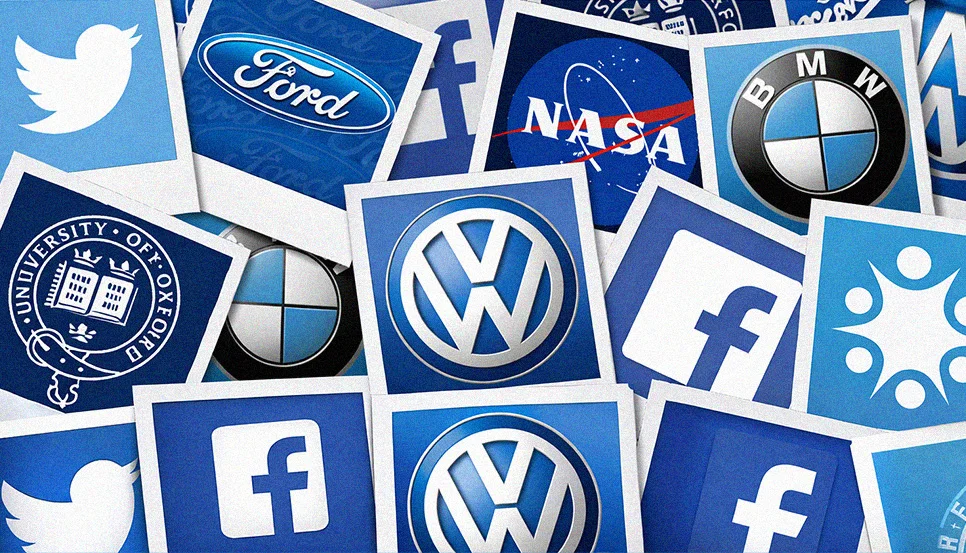
Blue logos consistently build brand trust because blue is strongly associated with reliability and security. This is why blue company logos and companies with a blue logo dominate industries where confidence matters. Consumer research in color psychology shows that blue is ranked among the most trusted colors in branding, and trust focused visual identity can lift conversion intent by 30 percent or more. As a result, brand logos that are blue and famous blue logos perform well at critical decision points.
Global Appeal of Blue Logos
Blue logos scale effectively across regions and markets. Unlike colors with strong cultural symbolism, blue maintains positive perception worldwide. Global brands rely on blue brand logos because they translate cleanly across languages, platforms, and audiences. Studies on international branding show that consistent color usage improves brand recognition by over 20 percent, reinforcing why company logos that are blue succeed globally.
Cultural Neutrality of Blue
Blue is considered culturally neutral compared to red, yellow, or green, which may carry conflicting meanings across regions. This neutrality allows blue logo companies to communicate stability without cultural risk. Logos with blue, blue and white logos, and dark blue brands are widely accepted across industries and geographies. This makes blue logos brands especially effective for multinational and digital first businesses.
Longevity and Timeless Design
Blue logos age well because the color is not tied to short term trends. Dark and light blue logo systems maintain relevance as design styles evolve. Many famous logos with blue have remained visually consistent for decades, reinforcing brand equity over time. Brand studies indicate that long term visual consistency strengthens brand recall and loyalty, making blue logos a reliable foundation for timeless design.
Advantages of Using Blue in Logo Design
Using blue in logo design or brochure design enhances recognition, readability, and cross-platform consistency, making blue logos highly effective for brands seeking visibility, trust, and long-term visual stability.
High Brand Recognition
Blue logos support strong brand recognition because the color is easy to process and remember across contexts. Companies with blue logos benefit from faster visual recall, especially when paired with simple shapes like a blue circle logo or blue square logo. Recent branding studies indicate that consistent color usage can improve brand recognition by more than 80 percent, which explains why many famous logos with blue and popular brand logos rely on blue as a core identifier.
Versatility Across Digital and Print
Blue performs reliably across digital screens and printed materials. Blue company logos retain clarity on websites, mobile apps, packaging, signage, and advertising. From light blue logo treatments to dark blue branding, blue maintains visual stability under different lighting and resolution conditions. This versatility is a key reason blue logo companies scale branding efficiently across channels and markets.
Strong Contrast and Readability
Blue offers strong contrast when paired with white, black, or complementary colors. Blue and white logos, logo blue white combinations, and blue logo with white elements improve legibility and accessibility. Accessibility research shows that high contrast color pairings significantly improve readability for users, including those with visual impairments. This makes logos with blue effective for inclusive and user friendly design.
Consistency Across Platforms
Consistency across platforms strengthens trust and brand authority. Brands with blue logos maintain color accuracy across browsers, devices, and media formats, reducing visual inconsistency. Company logos that are blue are easier to standardize within brand guidelines, which supports long term cohesion. Studies on omnichannel branding show that consistent visual identity can increase customer trust by over 20 percent, reinforcing the strategic advantage of blue in logo design.
When Blue May Not Be the Right Choice

Although blue logos communicate trust and stability, they are not ideal for every industry or market, especially where emotional impact, differentiation, or bold visual contrast is required.
Industries Where Blue Lacks Emotional Impact
While blue logos signal trust and stability, they may lack emotional intensity in industries driven by excitement, impulse, or warmth. Categories such as entertainment, food and beverage, fashion, and children’s products often benefit from more expressive colors. In these spaces, company logos that are blue can feel distant or conservative compared to red, orange, or yellow. Consumer studies on color response show that warm colors can trigger higher appetite and impulse reactions than blue, which explains why brands with blue logos are less common in emotionally driven purchases.
Overuse of Blue in Competitive Markets
In highly competitive sectors, overuse of blue creates sameness. Technology, finance, and SaaS markets are saturated with tech companies with blue logos, making differentiation harder. When many blue logo companies use similar shades, shapes, and layouts, brand recall can suffer. Research on brand distinctiveness shows that visually similar branding reduces memorability by up to 25 percent. In crowded markets, relying solely on blue logos brands without unique design elements increases the risk of blending in rather than standing out.
Differentiation Challenges With Blue Logos
Blue logos require careful execution to remain distinctive. Simple logos with blue color, blue and white logos, or dark blue branding can appear generic if typography, symbols, or layout lack originality. Blue logo companies must rely on strong iconography, custom lettering, or unconventional combinations to avoid visual fatigue. Without differentiation, even famous logos with blue can lose impact over time. This makes strategic design choices critical when choosing blue as a primary brand color.
Designing an Effective Blue Logo
Choosing the Right Shade of Blue
Selecting the right shade is critical to how blue logos are perceived. Light blue logos suggest openness and innovation, while dark blue brands and navy blue color logos communicate authority and reliability. Brands often use a dark and light blue logo together to balance trust with approachability. Design studies show that color shade selection directly influences brand perception and recall, making shade testing essential before finalizing a blue logo design.
Typography Pairing With Blue Logos
Typography plays a major role in strengthening blue brand logos. Clean sans serif fonts pair well with blue logos to reinforce modernity and clarity, while serif fonts enhance tradition and professionalism for corporate blue identities. Logos with blue text or blue logos with names benefit from strong letter spacing and contrast. Research in visual hierarchy confirms that well paired typography improves logo legibility and recognition across digital and print formats.
Using Blue With Secondary Colors

Blue performs best when supported by complementary colors. Blue and white logos improve clarity and accessibility, while blue and orange logos add energy and contrast. Blue and green logos suggest growth and sustainability, and red and blue logos convey strength and urgency. Brands that combine blue with secondary colors strategically improve visual differentiation. Industry branding reports show that multi color logos can increase attention and memorability when balance and contrast are properly managed.
Scalability and Logo Responsiveness
Effective blue logo design must scale across sizes and platforms. Logos should remain recognizable on websites, apps, packaging, and social media icons for social media marketing . Blue square logos, blue circle logos, and simplified blue symbols adapt well to responsive layouts. Studies on digital branding indicate that logos designed for responsiveness perform better in mobile environments, where screen size and resolution vary significantly.
Accessibility and Color Contrast Considerations
Accessibility is a key factor in modern logo design. Blue logos must meet contrast standards to remain readable for all users, including those with visual impairments. Blue and white logos often perform well when contrast ratios are optimized. Accessibility research shows that high contrast color combinations significantly improve usability and comprehension. Designing blue logos with accessibility in mind protects brand credibility while expanding audience reach.
Blue Logos in Web and Digital Design

Blue logos play a key role in web and digital PR design by enhancing clarity, consistency, and user experience across websites, apps, and modern digital platforms.
Blue Logos in Website Design
Blue logos are highly effective in website design because blue performs well on screens and supports readability. Many company logos that are blue use blue and white logo combinations to create clear contrast against backgrounds. Blue brand logos integrate easily into navigation bars, headers, and call to action areas without overwhelming users. This is why tech companies with blue logos dominate digital first industries where websites are the primary brand touchpoint.
Blue Branding Across Digital Platforms
Blue branding remains consistent across websites, mobile apps, social media, and digital advertising, making it a strong foundation for rebranding and refresh initiatives. Blue logo companies benefit from a uniform appearance across platforms, ensuring logos with blue maintain visual stability regardless of device or format. Blue square logos, blue circle logos, and simplified blue icons scale effectively for app icons and profile images. Consistent blue branding across platforms strengthens recognition and reinforces long-term trust in blue brands.
Blue Logos and User Experience
Blue positively influences user experience by creating a sense of calm and control. Blue logos reduce visual strain and help users navigate interfaces comfortably. Research in UX audit design shows that blue based interfaces are perceived as more intuitive and reliable. This explains why blue logos brands and famous blue logos are common in platforms where long sessions, data interaction, and usability are critical.
Should Your Brand Use a Blue Logo
Deciding whether to use a blue logo requires aligning brand personality, audience expectations, and competitive positioning to ensure blue branding supports clarity, trust, and long-term differentiation.
Evaluating Brand Personality and Audience
Choosing a blue logo should start with understanding brand personality and audience expectations. Blue company logos work best for brands that want to communicate trust, stability, and professionalism. At COLAB DXB, our web design and development agency evaluates whether blue aligns with a brand’s voice, values, and target market. For B2B, technology, finance, and corporate brands, blue logos often reinforce credibility. For lifestyle or emotionally driven brands, alternative colors may better support engagement.

Competitive Analysis Before Choosing Blue
Before adopting blue branding, competitive analysis is essential. Many companies with blue logos operate in crowded markets, especially technology and professional services. COLAB DXB analyzes competitor logo color usage, shade selection, and visual patterns to identify differentiation opportunities. When multiple blue logo companies use similar tones or layouts, brands risk blending in. Strategic contrast, typography, and secondary colors help blue logos brands stand out while retaining trust signals.
Blue Logo Testing and Feedback
Testing is a critical step before finalizing a blue logo. COLAB DXB conducts visual testing across digital platforms, print applications, and user touchpoints to evaluate clarity, recognition, and emotional response. Gathering feedback from real users helps validate whether blue logo designs communicate the intended message. Iterative testing ensures that the final blue brand logo performs effectively across audiences, devices, and competitive environments.
Why Blue Continues to Win the Trust Economy
Blue keeps winning because it does two hard jobs at once. It builds immediate trust and it stays readable everywhere, from app icons and mobile headers to packaging and print. That is why famous blue logos and blue logo companies dominate industries where credibility drives clicks, sign ups, and purchases. Blue also travels well across cultures, which helps blue company logos stay consistent in global markets even as design trends move toward simpler, more responsive marks.
A strong blue identity is not just about picking a “nice” shade. The best blue brand logos earn long term recognition by pairing the right tone with intentional typography, a distinctive shape system, and smart supporting colors that prevent the brand from looking generic in crowded categories. When blue is applied consistently across every touchpoint, it turns into a visual shortcut for reliability. That is how companies with blue logos protect brand equity, stay memorable, and keep trust compounding over time.

About The Author
Sid hasan
Sid Hasan is an entrepreneur and marketing strategist recognized for his expertise in brand growth, digital innovation, and business development. With over a decade of experience, he has guided companies in building data-driven marketing ecosystems that generate measurable results.
As the founder of COLAB Marketing Inc., Sid leads a global agency serving over 200 brands across the U.S. and UAE, blending creative storytelling with performance-driven strategy to help businesses scale effectively.
Through COLAB, he continues to empower emerging and established brands to transform ideas into lasting market impact through strategic clarity, creative execution, and digital excellence.
