
What Is a Social Media Marketing Strategy?

A social media marketing strategy sets the direction for how a business will use social platforms to support specific business outcomes.
It answers seven practical questions.
| Question | Strategic decision |
|---|---|
| Why are we using social media? | Business objective |
| Who are we trying to reach? | Target audience |
| Where should we reach them? | Platform role |
| What should we communicate? | Content strategy |
| How will people find the content? | Distribution |
| What should happen next? | Conversion path |
| How will we judge performance? | Measurement |
The simplest way to think about social media strategy is this:
business goal → audience → platform → content → distribution → action → measurement.
Each part affects the next. A platform should not be selected before the audience is clear. Content should not be created before the platform’s role is defined. Engagement metrics should not become the main measure if the actual business goal is qualified leads or sales.
What counts as a “bounce”
These terms are often used as if they mean the same thing. They do different jobs.
| Term | What it means | Example |
|---|---|---|
| Social media strategy | The overall direction and decision framework | Use LinkedIn to build authority with operations executives |
| Social media marketing plan | The execution plan that puts the strategy into action | Publish three expert posts each week and one monthly video |
| Social media campaign strategy | A focused plan for a specific initiative | Promote a new service for six weeks |
| Content calendar | A schedule of what will be published | Tuesday video, Thursday carousel, Friday case example |
| Tactic | An individual action | Retarget video viewers with a lead ad |
A calendar can tell a team what goes live on Tuesday. A strategy explains why Tuesday’s post exists at all.
What Should a Social Media Marketing Strategy Include?

An effective strategy should be detailed enough to guide decisions without becoming a document that nobody opens after the first meeting.
At minimum, it should define:
- Business objective and social media goals
- Target audience and audience needs
- Customer buying path
- Role of each selected platform
- Competitor and audience research
- Social media content strategy
- Organic, paid, creator, and community distribution
- Conversion path and calls to action
- Community management process
- KPIs and reporting
- Content approval and publishing responsibilities
- Review and optimization schedule
Every part of the strategy should connect back to a business result.
That test removes a surprising amount of unnecessary work. If a new account, content format, campaign idea, or reporting metric cannot be connected to an audience need or business objective, it may not deserve resources yet.
How to Create a Social Media Marketing Strategy in 8 Steps
A good strategy begins before the first post is written.
Teams often start with visible work such as graphics, captions, videos, and content calendars. That creates activity quickly, but it can also produce months of content with little commercial value.
The better sequence starts with the result the business needs.

1. Start With the Business Outcome, Not Followers
Ask what the company needs social media to accomplish.
That may be brand awareness. For another business, it could be qualified leads, online sales, customer retention, recruitment, event registrations, appointments, or product education.
Followers can support some of those goals, but follower growth is rarely a useful business objective on its own.
Consider a B2B company that wants more sales opportunities. Its measurement structure might look like this:
| Level | Metric |
|---|---|
| Business outcome | New revenue |
| Commercial KPI | Qualified opportunities |
| Conversion KPI | Demo requests |
| Social KPI | Qualified website visits |
| Content signal | Relevant clicks, saves, shares, profile visits |
This structure keeps reporting connected to the reason the company is investing in social media.
The same principle applies to ecommerce. Revenue may be the final outcome, while product-page visits, add-to-cart activity, creator referrals, and purchases from social traffic reveal what is contributing to that outcome.
Choose the business result first. Choose the social metrics second.

2. Define the Audience by Intent and Behavior
Basic demographic information is useful, but it rarely tells a marketer what to publish.
Knowing that an audience is 30 to 45 years old and lives in a certain city says little about what will earn attention.
Useful audience research goes further.
Find out what customers are trying to solve. Review what they ask sales teams before buying. Study the language used in reviews, direct messages, comments, search queries, support requests, and sales calls.
Look for recurring patterns. What questions appear again and again? Which objections delay a decision? Which comparisons do buyers make? What evidence do they need before trusting a provider?
Social listening belongs here too. DigitalMarketer’s social marketing framework places listening as the first of its four stages, ahead of influencing, networking, and selling, because audience conversations can reveal topics, objections, complaints, and content gaps before a brand publishes.
The practical goal is to move from a broad persona to a usable audience profile.
Instead of:
Small business owners aged 30 to 50.
Build something closer to:
Owners of growing service businesses who need more qualified enquiries, have tried inconsistent social posting, question whether engagement leads to revenue, and need proof before increasing marketing spend.
The second description gives the content team something it can actually use.

3. Audit What Is Already Working
Before creating a new social marketing strategy, inspect the evidence already available.
Start with the current accounts. Identify which posts attract the right audience rather than simply the largest audience.
Then compare content performance with downstream behavior. A video with 80,000 views may look successful. A post with 4,000 views may be more valuable if it generates ten qualified enquiries.
Review signals such as non-follower reach, saves, shares, profile visits, website clicks, enquiries, lead quality, assisted conversions, and revenue where tracking allows it.
Also review what people say. Comments and direct messages often explain performance better than a dashboard. They show what confused people, what created interest, what they disagreed with, and what they want explained next.
Competitor research belongs in the audit as well, but copying competitor topics should not be the objective. Look for gaps. If every competitor explains the same five beginner ideas, publishing a sixth version adds little. Find unanswered customer questions, weak explanations, missing proof, or viewpoints that the market has not covered well.

4. Give Every Social Platform a Job
A business does not need an account everywhere. It needs the right platforms for the audience and a clear reason for using each one.
Adobe’s guidance on choosing social platforms puts it directly: “Social media isn’t about being everywhere. It’s about being effective in the right places.” Current audience research also shows that user expectations differ by platform, which makes channel-specific decisions more useful than copying the same content across every account.
Think in terms of platform roles.
| Platform role | What the platform needs to accomplish |
|---|---|
| Discovery | Introduce the brand to new people |
| Education | Explain problems, options, or solutions |
| Authority | Demonstrate credible expertise |
| Validation | Provide proof and reduce doubt |
| Community | Maintain conversation with the audience |
| Conversion | Generate enquiries, appointments, or purchases |
| Retention | Support and reconnect with customers |
One network can fill more than one role. For example, LinkedIn might support discovery, authority, and B2B lead generation. YouTube might support education, search visibility, and buyer validation. Instagram could support discovery, visual proof, creator partnerships, and direct-message enquiries.
The strategic question is not “Which platforms are popular?” It is “What job should each selected platform perform for this audience?”
That change makes platform selection much easier.
5. Build a Social Media Content Strategy Around Customer Questions
A social media content strategy should begin with what customers need to know, believe, compare, or see before taking the next step.
Generic content categories such as “educate, entertain, inspire” can help with brainstorming, but they rarely provide enough direction for a business.
Build content pillars from real customer information instead. Strong sources include sales questions, common objections, product use cases, customer reviews, search demand, misconceptions, industry changes, demonstrations, and proof.
A service business might use four core pillars:
| Content pillar | Purpose |
|---|---|
| Customer problems | Create relevance |
| Expert explanation | Build credibility |
| Evidence and examples | Reduce risk |
| Service or product application | Connect expertise to the offer |
Then match the topic with the right format. A question that can be answered in 20 seconds may fit short-form video. A comparison may work better as a carousel. A technical topic might need a longer video or article. A strong customer result can become a case example if the company has permission and documented evidence.
Avoid forcing universal ratios such as “50% this, 30% that, 20% promotion.” A 50-30-20 content mix is a commonly circulated rule of thumb, while University of San Diego’s Division of Professional & Continuing Education recommends a different 70-20-10 split: 70% brand-building content, 20% curated content shared from others (with credit), and 10% direct promotion. The disagreement between frameworks is the point: treat fixed ratios as optional planning aids rather than universal rules.
The right mix depends on the audience, offer, buying cycle, platform, and available evidence.
6. Connect Organic, Paid, Creators, and Community
Organic social media and paid social media should not operate as unrelated departments. They can inform each other.
Organic publishing can reveal which topics, hooks, arguments, and formats attract meaningful attention. Paid distribution can then put proven messages in front of larger or more specific audiences.
The feedback loop can work like this:
Publish → observe → identify strong messages → amplify → retarget → measure conversions → apply the findings to future content.
Creator partnerships can add another distribution layer. Community interaction adds another source of feedback.
This is where a social media promotion strategy becomes more useful than simply “boosting posts.” Promotion should have a defined purpose.
A high-performing educational video might receive paid support because it consistently produces qualified website visits. A creator video might be reused in an advertising campaign after the team confirms usage rights and sees strong audience response.
Paid media then becomes part of the learning system, rather than a separate activity that begins after organic content “fails.”

7. Design the Conversion Path Before Publishing
Attention has little commercial value if the audience has nowhere useful to go next.
Before publishing, decide what action makes sense after someone sees the content.
For one business, the path may be:
LinkedIn post → service page → consultation form → CRM → sales follow-up
For another:
Instagram Reel → direct message → qualification → appointment
An ecommerce brand may use:
Creator content → product page → purchase
The next action should match the content. Someone watching an introductory educational video may not be ready for a sales call. A softer next step, such as viewing a guide, reading a comparison, or following the account, may fit better.
Someone reading a detailed case example may be much closer to a buying decision.
This is why calls to action should vary by intent rather than ending every post with “Book a call.” Good social media marketing creates a logical next action, not pressure for an immediate sale.

8. Connect Social Media KPIs to Revenue
Likes and impressions are easy to report. They are harder to interpret without context.
A useful measurement model separates leading indicators from commercial outcomes.
| Business objective | Commercial KPI | Social media KPI |
|---|---|---|
| Revenue | Closed sales | Social-assisted conversions |
| Lead generation | Qualified leads | Form submissions or qualified DMs |
| Ecommerce | Purchases | Product-page visits and social conversions |
| Awareness | Relevant audience growth | Non-follower reach |
| Authority | Brand consideration | Saves, shares, mentions |
| Retention | Repeat purchase or retention | Customer interactions and service conversations |
A high engagement rate can indicate that content connects with an audience. It does not prove that social media produced revenue.
Use tracking that fits the business. UTM parameters can identify campaign traffic. Analytics platforms can show website behavior. CRM records can show whether a lead became a sales opportunity. Ecommerce tracking can connect campaigns with purchases where attribution data is available.
No single attribution model gives a perfect account of every customer interaction. The goal is to build enough evidence to make better decisions.
What Changes in a Social Media Strategy in 2026?
The basic principles remain stable. Businesses still need clear goals, relevant audiences, useful content, appropriate platforms, and reliable measurement.
What has changed is how people discover content, what they expect from brands, and how marketing teams use AI.
Video: Predicting the 7 Biggest Social Media Marketing Trends for 2026 by Neil Patel. A rundown of emerging social media marketing trends for 2026.
Social Search Is Part of Content Discovery
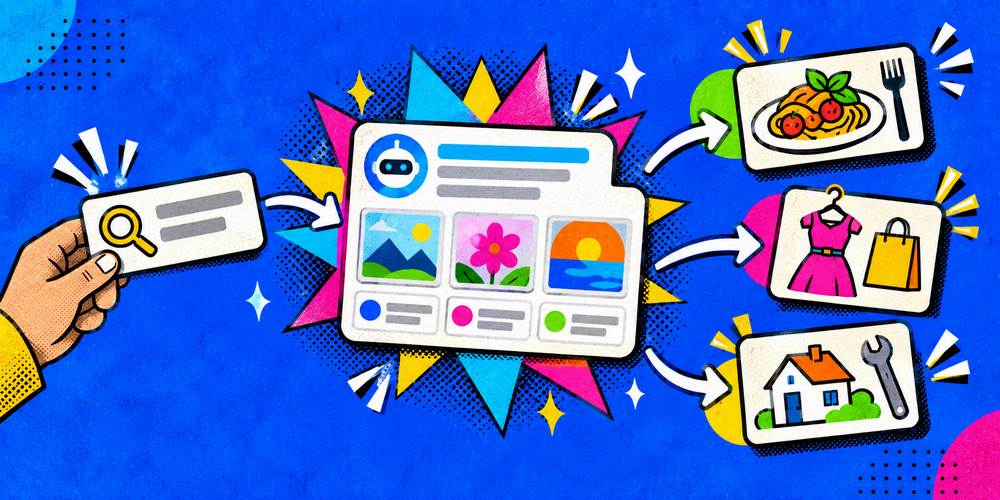
People use social platforms to search for brands, products, recommendations, places, explanations, and opinions.
Sprout Social’s Q2 2026 Pulse Survey covers social search as an alternative to traditional search, alongside AI tools, as part of how people discover brands and information online.
That means social content needs to make its subject clear. A vague caption paired with a clever video may entertain existing followers but provide little context for someone actively searching for an answer.
Use clear topic language in captions, video titles, spoken explanations, profile information, and on-screen text where it improves the user experience. This does not mean repeating exact keywords in every post. Social search works best when the content clearly answers a recognizable question or need.
AI Should Support the Work, Not Replace the Point of View
AI can assist with research, transcription, idea organization, content variations, tagging, reporting, and data analysis. The brand still needs something worth saying.
Sprout Social’s 2026 Social Media Content Strategy Report surveyed more than 2,300 consumers and 1,200 marketers across the US, UK, and Australia. Its lead finding: consumers want brands to make human-generated content their top priority, using AI to power audience insight and process efficiency rather than to replace human judgment.
That creates a useful division of work. Human contributors provide expertise, opinions, examples, judgment, customer context, and brand voice. AI can reduce repetitive production work and help teams organize larger amounts of information.
A company that uses AI to produce more generic posts may increase output without increasing relevance.

Social Media Is Becoming a Research Source
Comments, direct messages, lead forms, community discussions, and social listening data can reveal far more than content performance. They can show demand.
Hootsuite’s 2026 trend research identifies social platforms as an increasingly useful source of first-party information: lead-gen ads, subscriptions, gated content, live events, and DMs all provide direct signals about intent and interest that can be paired with CRM data.
That information can influence sales scripts, paid advertising, website copy, FAQ content, product development, and future campaigns.
A recurring question in direct messages might deserve a public video. A repeated sales objection might become a comparison post. A complaint that appears across multiple channels may point to a product or service issue rather than a content issue.
Social media strategy becomes more valuable when information flows back into the business.

Creative Testing Is Part of the Strategy
Content teams used to place a great deal of effort into producing one polished version of an idea. A better model often tests several credible approaches.
Change the hook. Change the opening visual. Test a demonstration against an expert explanation. Compare a short version with a longer one. Then review what happens.
Hootsuite’s 2026 trend research highlights rapid experimentation and continuous testing and iteration as major parts of current social workflows.
The purpose is not to chase every trend. It is to learn which messages and formats help the intended audience pay attention, respond, and take action.

How Should Dubai Businesses Approach Social Media Marketing in 2026?
A social media marketing strategy for Dubai needs more than a global content plan with local hashtags added later.
Dubai businesses need to account for audience mix, language, platform behavior, cultural context, commercial intent, and UAE advertising requirements from the start.
The UAE has one of the highest levels of digital participation globally. DataReportal’s Digital 2026: United Arab Emirates report recorded 11.3 million internet users and 12.5 million social media user identities as of October 2025. The social media figure represents platform identities rather than 12.5 million unique people, but it still shows how central social platforms are to the country’s digital market.
That high usage does not mean every Dubai audience behaves the same way.
Segment Dubai Audiences Before Choosing Platforms
Dubai brings together Emiratis, long-term residents, professionals, business owners, tourists, and expatriate communities from many countries.
A broad target such as “people in Dubai” is rarely enough. A stronger strategy considers:
- Customer location within the UAE
- Age and buying intent
- Arabic, English, or multilingual communication needs
- Resident, visitor, or business audience
- B2B versus consumer purchase behavior
- Price sensitivity and purchase value
- Platform preference
- Stage of consideration
Language should follow the audience rather than a fixed rule. Some brands may perform well with English-first communication. Others may need Arabic-first creative or separate Arabic and English campaigns. In many cases, keeping the same message and simply translating the caption misses differences in context, tone, and customer expectations.
Localization means adapting the message to the audience, not replacing English words with Arabic ones.

Choose Platforms Based on Their Commercial Role
Large audience estimates can tempt businesses to choose channels based on reach alone. That is risky.
DataReportal’s Digital 2026 UAE report shows substantial advertising audiences across Instagram, TikTok, and LinkedIn. Instagram’s advertising tools reported 8.05 million users in the UAE in late 2025, while LinkedIn reported 10 million registered members. These measurements use different methodologies, so they should not be compared as equivalent active-user figures.
The useful question remains the same: what does this platform need to accomplish for the business?
A Dubai B2B company may use LinkedIn for executive visibility, expert content, and lead generation. A restaurant, hospitality brand, beauty business, retailer, or lifestyle company may give Instagram a larger role in discovery, visual proof, creator content, and customer interaction. TikTok may support discovery and short-form education for businesses whose audience and creative format fit the platform.
The platform decision should follow the audience and business objective, not a national popularity ranking.

Plan Around UAE Cultural and Commercial Moments
Dubai content calendars should reflect periods that influence customer attention and buying behavior.
Depending on the business, that may include Ramadan, Eid al-Fitr, Eid al-Adha, Eid Al Etihad, seasonal travel periods, major retail periods, school calendars, exhibitions, and major Dubai events.
That does not mean every occasion needs a branded greeting. A relevant campaign connects the moment with an actual customer need, offer, product, service, or community conversation. A generic holiday graphic may fill a slot in the calendar without contributing much to the strategy.

Treat Creator Compliance as Part of Campaign Planning
Creator and influencer activity in the UAE also has a regulatory layer.
The UAE National Media Authority’s Advertiser Permit requirement, in effect since February 2026, applies to individuals providing advertising or media content through social media and other digital platforms, whether for monetary or non-monetary compensation. Visiting or overseas creators fall under a separate, sponsor-required permit track.
For brands working with creators, compliance should therefore be considered before content goes live. This is a live regulatory requirement; confirm current terms with the National Media Authority or a licensed UAE advertising agency before relying on it for a specific campaign. The planning process should cover:
creator selection → permit verification where applicable → campaign terms → content approval → disclosure → publishing → performance tracking
This is especially important for companies running frequent influencer campaigns or bringing overseas creators into UAE campaigns.

Connect Dubai Social Activity to Leads and Revenue
Local relevance should also extend to measurement. A Dubai business should be able to distinguish between broad engagement and activity from people who could realistically become customers.
For a service company, that could mean tracking:
social content → service-page visit → enquiry → qualified lead → sales opportunity → customer
For a retail or ecommerce business:
social content → product visit → add to cart → purchase
For a business that receives enquiries through direct messages:
content → DM → qualified conversation → appointment or sale
This is where social media stops being a publishing function and becomes part of the company’s wider marketing and sales system.
A Practical Approach From COLAB DXB
At COLAB DXB, we treat social media strategy as one part of a connected digital growth plan. That means defining the commercial goal first, then deciding how content, organic social, paid media, creators, landing pages, conversion tracking, and reporting should work together.
For Dubai businesses, the strategy should answer five questions clearly:
- Who in the UAE are we trying to reach?
- Which platforms can reach them in the right context?
- What information or proof will help them act?
- Where should social traffic or enquiries go next?
- Which business result will determine whether the strategy is working?
If those answers are clear, the content calendar becomes much easier to build. If they are unclear, posting more often usually does not solve the problem.
What Does a Social Media Marketing Strategy Look Like?
Consider a B2B service company that wants to generate more qualified sales opportunities. Its 90-day social media marketing strategy might look like this:
| Strategy element | Example decision |
|---|---|
| Business goal | Generate qualified sales opportunities |
| Audience | Operations leaders at mid-sized companies |
| Primary platform | |
| Supporting platform | YouTube |
| LinkedIn role | Discovery and authority |
| YouTube role | Education and validation |
| Content pillar 1 | Operational problems |
| Content pillar 2 | Expert explanations |
| Content pillar 3 | Evidence and examples |
| Content pillar 4 | Common buying questions |
| Main CTA | Request a consultation |
| Paid activity | Amplify proven organic content |
| Main KPI | Qualified opportunities |
| Review schedule | Monthly |
The important part is the reasoning behind those choices.
The business is not using LinkedIn because “every B2B company needs LinkedIn.” It is using LinkedIn because the selected audience can be reached there and the format supports professional expertise.
YouTube has a different role. It gives the business more space to explain difficult topics and gives prospective buyers additional material to review before speaking with sales.
The content pillars come from customer needs rather than arbitrary themes. Paid activity is introduced after the company has evidence about which messages generate useful responses.
This is what a working social media marketing plan should do. Each decision connects to the next one.
Case Study: Social Media Strategy for Lexi Beauty Products
[ORIGINAL DATA]
Before working with COLAB DXB, Lexi Beauty Products’ social media was primarily focused on maintaining a posting presence, with limited connection between content, audience intent, enquiries, and bookings.
COLAB DXB created a structured social media strategy focused on content planning, service visibility, audience engagement, and stronger conversion paths.
After implementation, Lexi Beauty Products recorded:
- 47% increase in social media reach
- 62% increase in engagement
- 37% growth in profile or website visits
- 60% increase in enquiries or bookings
The strategy shifted social media from routine publishing into a measurable marketing channel, with each content theme and CTA connected to a specific customer action.
Before: Content focused mainly on maintaining visibility.
After: Social media supported measurable reach, engagement, enquiries, and booking activity.
When Should You Update Your Social Media Strategy?
A social media strategy should be reviewed regularly, but that does not mean rebuilding it every few weeks.
Frequent tactical changes can make learning harder because the team never gives an approach enough time to produce useful evidence.
Review the strategy when there is a meaningful reason. A new product may require a different audience. A change in business objectives may require new KPIs. Falling lead quality may point to a message or targeting problem. A platform change may alter distribution. Customer research may reveal a problem that the current content plan does not address.
Performance reviews should ask more than “Which post performed best?”
Ask what the team learned. Which message attracted qualified attention? Which audience responded? Which questions appeared? Which content helped people move closer to a decision? Which activities consumed resources without producing useful signals?
A strategy should change because the evidence changed, not because the calendar reached a new month.
Build the Strategy Around Decisions, Not Posts
Social media marketing works best when every platform, piece of content, campaign, and metric has a defined role.
A strong social media marketing strategy tells a business who it needs to reach, what those people need to hear, where the conversation should happen, what action should follow, and which evidence will determine the next decision.
Start there. The content calendar comes later.

About The Author
Sid hasan
Sid Hasan is an entrepreneur and marketing strategist recognized for his expertise in brand growth, digital innovation, and business development. With over a decade of experience, he has guided companies in building data-driven marketing ecosystems that generate measurable results.
As the founder of COLAB Marketing Inc., Sid leads a global agency serving over 200 brands across the U.S. and UAE, blending creative storytelling with performance-driven strategy to help businesses scale effectively.
Through COLAB, he continues to empower emerging and established brands to transform ideas into lasting market impact through strategic clarity, creative execution, and digital excellence.
